
Feeling seen and understood by your partner is everything. It’s the difference between living parallel lives and sharing one. But this kind of connection isn’t built on grand gestures. It’s forged in small, consistent moments of paying attention.
This guide skips the fluff. It’s a practical look at how to build that deep, secure bond, even when life is demanding.
What Emotional Intimacy Actually Is
Let’s be direct. You’re both busy. You’re both driven. But sometimes it feels like you’re operating on separate tracks. This isn’t a sign of failure. It’s a common gap that big vacations and expensive date nights can’t fix.
You’ve probably heard the advice to “just talk more.” So you do. You talk about schedules, logistics, what happened at work. But you still feel disconnected. Why? Because the quality of your interaction matters far more than the quantity.
Emotional intimacy isn’t about constant, heavy conversations. It’s the feeling of safety. It’s knowing you can share your inner world—your wins, your anxieties, your half-formed thoughts—without being judged, dismissed, or “fixed.”
The Real Foundation of Connection
True intimacy rests on a few core principles. Getting these right is the foundational shift. It makes everything else work.
- Psychological Safety: This is the bedrock. It’s the unspoken agreement that you can be your full self—messy, uncertain, imperfect—and still be accepted. It’s knowing your vulnerability won’t be used against you later.
- Shared Understanding: This goes beyond knowing facts about each other. It’s grasping your partner’s emotional reality. You get why a small comment from their boss ruined their day, even if it wouldn’t bother you.
- Genuine Presence: This means offering your undivided attention. Even for just a few minutes. Put the phone down. Make eye contact. Listen to understand, not just to reply.
A study on relationship satisfaction found that couples who dedicated more time specifically to talking felt closer. It wasn’t just time together. It was time spent in genuine interaction that made the difference.
This guide will give you practical tools. No clichés. Just a clear path to building a secure bond in the middle of a busy life.
It Starts with Listening (Really Listening)
Most of us think we’re good listeners. We’re not. We’re good at waiting for our turn to talk. Your partner starts sharing, and your mind is already racing. Crafting a reply. A solution. A counter-argument. This is where connection breaks down.
The point isn’t to fix their problem. It’s to make them feel heard.
Shifting from listening to reply to listening to understand is a game-changer. It’s not about nodding along. It’s about validation. Curiosity. It can turn a mundane “how was your day?” into a real moment of connection. You can start practicing this tonight.
Stop Trying to Fix It. Just Validate It.
Imagine your partner is stressed about work. Your instinct is to problem-solve. “You should talk to your boss.” Or, “Don’t worry about it.” It comes from a good place. But it sends a message: “Your feeling is a problem that needs fixing.”
An intimacy-building response sounds different.
- Instead of: “You shouldn’t feel that way.”
- Try: “That sounds incredibly frustrating. Tell me more about what happened.”
You don’t have to agree with their perspective. You just have to acknowledge their emotion as valid. Validation says, “I see you. I hear you. What you feel is real.”
Deep listening is just pure curiosity. It’s the desire to understand your partner’s inner world, even when you can’t see it from where you stand. This is how psychological safety is built.
What This Looks Like in Real Life
Here’s a familiar scene. Your partner gets home, clearly frazzled.
The Connection-Killer Response:
- Them: “I had such a stressful day. The project is a mess, and I feel like I’m totally failing.”
- You (glancing up from your phone): “It’ll be fine. You always figure it out. What’s for dinner?”
This reply is a shutdown. It minimizes their feelings. It signals you aren’t really there with them.
The Intimacy-Building Response:
- Them: “I had such a stressful day. The project is a mess, and I feel like I’m totally failing.”
- You (putting your phone down, turning to face them): “That sounds tough. What’s making you feel like you’re failing?”
See the difference? The second response invites them to say more. It shows you’re paying attention. That what they feel matters. Giving someone your undivided attention changes everything.
One study found that while 43.3% of couples reported below-average satisfaction, those who spent more time in genuine interaction felt significantly closer. You can discover more insights on how talking boosts relationship satisfaction. It proves these small moments of listening are where real intimacy happens.
Use Micro-Habits to Build Daily Connection
Lasting intimacy isn’t built during a single, marathon conversation. It’s forged in small, consistent moments. The moments you share when you’re both tired, busy, and just trying to get through the week.
The best news? The most effective habits are small. They’re micro-habits. Actions that take less than five minutes but deliver a huge emotional return. Think of them as strategic deposits into your relationship’s emotional bank account.
Integrate Connection Into Your Routine
Stop trying to add more to your schedule. Instead, look for tiny moments you can adjust. Weave intimacy into the life you already have.
Here are a couple of high-impact, low-effort practices:
- The One-Thing Check-In: Before leaving in the morning, ask: “What’s one thing you’re focused on today?” This isn’t about solving their problems. It’s a 60-second ritual that says, “I see you. I’m carrying a piece of your day with me.”
- The Digital High-Five: Did your partner mention a big meeting? A simple text like, “Thinking of you. You’ve got this,” takes ten seconds. It powerfully reinforces that you’re a team.
These tiny actions interrupt the autopilot of a busy day. They create a small, private bubble where it’s just the two of you.
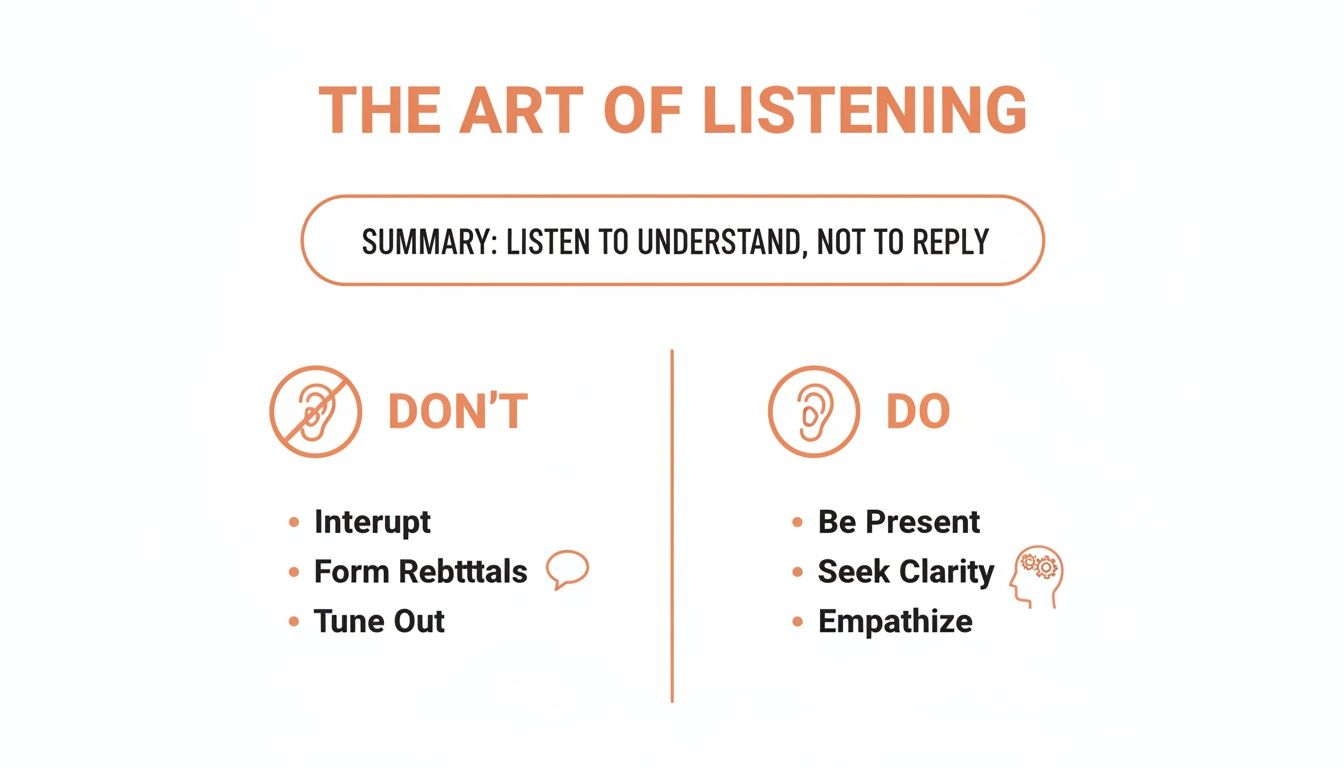
This shift from simply hearing words to truly understanding feelings is the foundation.
A Practical Menu of Micro-Practices
Choose one or two habits from the list below. Pick what feels easy. The goal isn’t to do everything. It’s to find a sustainable rhythm.
For a structured way to make these check-ins consistent, tools like the Twine app for couples can help turn these small daily inputs into meaningful, long-term insights.
Here are a few more ideas.
Daily Intimacy Micro-Practices
Simple, under-5-minute actions to integrate connection into your schedule.
| Micro-Practice | Time Required | Core Emotional Benefit |
|---|---|---|
| End-of-Day ‘Highlight & Hardship’ | 3-5 minutes | Share one positive thing and one challenging thing from your day. It’s a simple, structured way to share your inner world. |
| Six-Second Kiss | 6 seconds | A deliberate, non-rushed kiss. This brief moment of physical connection can release oxytocin and create a real feeling of closeness. |
| Appreciation Text | 1 minute | Send a text thanking your partner for something specific. “Thanks for making coffee this morning,” shows you notice the small things. |
The key is finding what works for your dynamic.
The goal isn’t perfection. It’s consistent, imperfect effort. A quick, distracted check-in is better than a perfect date night that never happens.
These micro-habits are about turning toward each other, not away. They are small signals that say, “You are seen. You are valued. We are in this together.” That is the foundation of lasting emotional intimacy.
Build Self-Awareness for a Stronger Partnership

Sometimes the biggest hurdle to getting closer isn’t your partner. It’s you. It’s not knowing what you’re feeling yourself.
It’s impossible to communicate what you don’t understand. When your internal world is a vague fog of stress, conversations go sideways. You default to blame or just shut down. All because you haven’t pinpointed what’s really bothering you.
This is where private reflection makes a world of difference. Not a detailed diary. Just two minutes to get clear on your own emotional state. It’s a prerequisite for showing up with intention.
Turn Vague Feelings into Clear Insights
This simple practice is like collecting emotional data. Instead of just feeling “off,” a quick moment of reflection can help you pinpoint the exact trigger.
Try asking yourself one of these private prompts. The answers are for you alone. Their only job is to give you clarity.
- When did I feel most connected to my partner today? This helps you notice the small moments that are easy to miss.
- What was one thing I wanted to share but didn’t? Why? This can reveal unmet needs or a fear of being vulnerable.
- When did I feel defensive today? Naming the moment helps you understand your triggers before they become a fight.
Answering one of these questions takes less time than scrolling Instagram. The payoff is infinitely greater. It turns that internal fog into something tangible you can work with.
The real benefit is moving from reacting in the moment to responding with intention. When you know where you stand emotionally, communicating your needs clearly becomes much easier.
This personal work directly impacts your relationship. A study of 400 married individuals found emotional intimacy was a powerhouse predictor of marital satisfaction. The correlation was 0.68, showing the measurable impact of consistent emotional closeness. You can read more about the findings on emotional closeness and see the data for yourself.
Self-Awareness Fuels Better Conversations
Once you’ve checked in with yourself, you can start a conversation from a place of strength.
Instead of saying, “You’re always so distracted,” you can say, “I felt a little lonely when we were talking earlier and you were on your phone.”
See the difference? It moves the conversation from an accusation to an observation about your feelings. This is far more likely to invite empathy instead of defensiveness. It turns a potential conflict into a chance to connect.
Turn Insights Into Measurable Growth
Good intentions are a start. But you can’t build a stronger connection on intentions alone. You’ve been practicing listening and getting clear on your own feelings. Now, let’s turn those personal insights into a clear plan.
This part is for anyone who likes goals and data. We’re going to shift from a vague idea like, “we should feel closer,” to a concrete project. Making emotional intimacy something you build, not just something you hope for.
From Vague Hopes to a Shared Focus
First, distill your recent insights into a single, shared “Focus Area.” This isn’t a long list of problems. It’s picking one theme that feels most important to both of you right now.
Think back over your recent conversations. What keeps coming up?
- Maybe you realize how many thoughtful things your partner does that you never mention. Your Focus Area could be: “Catching each other doing something right.”
- Perhaps you notice your talks are all logistics. Who’s picking up the kids? What’s for dinner? Your Focus Area could be: “Sharing more of our inner worlds.”
- Or maybe your only “quality time” happens when you’re both exhausted and scrolling on your phones. Your Focus Area might be: “Creating pockets of intentional connection.”
Choosing one target gives you a shared language and a clear destination. It stops you from getting overwhelmed.
This isn’t a performance review. It’s a shared dashboard for your relationship. A simple way to see if your small efforts are adding up.
How to Track Progress Without Pressure
Once you have a Focus Area, you need an easy way to see how you’re doing. This shouldn’t feel like another chore. All you need is a quick check-in.
A couple of times a week, take 30 seconds to privately rate your progress on a scale of 1 to 10. How connected did you feel? How well did we express appreciation? This isn’t about comparing scores. It’s about gathering your own data points to see the trend over time.
Seeing that number slowly climb from a 5 to a 7 is incredibly motivating. It’s the clear, tangible feedback that keeps you in the game.
When You Hit a Plateau
Progress is never a straight line. You’ll have off weeks. Work will get crazy. Old habits will reappear. Your rating might dip.
This is not a failure. It’s a data point.
When you hit a plateau, get curious, not critical. Ask: “What was different this week? What got in our way?” Maybe a huge deadline drained your energy. Maybe you forgot your daily check-in. That’s valuable information. It helps you adjust your approach, not abandon it.
This process gives you the clarity to create lasting change. It turns the work of building a deeper connection into a shared project you can both feel proud of.
Working Through Inevitable Roadblocks
Every couple hits roadblocks. This isn’t a red flag. It’s an area with room to grow. When you’re working to build a deeper connection, skeptical thoughts and real-world hurdles can feel like a setback.
Let’s tackle a few common questions. The goal isn’t a magic fix. It’s learning to move through these moments together without losing steam.
“What if I’m more into this than my partner?”
This is a big one. It’s frustrating to feel like you’re the only one trying.
Start with yourself. You can only control your side of the relationship. Focus on what you can do. Sharpen your listening skills. Practice self-awareness. Keep making small bids for connection. Often, one partner’s consistent, positive changes can inspire the other to show up differently. Lead by example, not by demand.
“We’re just too busy and tired for this.”
This is the reality for most modern couples. The key isn’t to add another overwhelming task. It’s about weaving connection into the small moments you already share.
Think tiny. A 60-second check-in before you both fall asleep is more powerful than a two-hour date night that keeps getting rescheduled. Start with one “micro-habit” that feels almost too easy. The goal is to build momentum, not pressure.
It’s okay to name the awkwardness. You can say, “This feels a little new for us, but I want to try because you’re important to me.” Being vulnerable about the process is itself an act of intimacy. A little discomfort often means you’re stepping into new, healthier territory.
Trying to connect more deeply can also ripple into other parts of your relationship. Research shows that daily emotional intimacy—sharing feelings, showing affection—is what sustains sexual desire over the long haul. On days with more emotional connection, couples report higher desire. It creates a positive loop where closeness fuels passion. You can read more about how intimacy and satisfaction are linked to see how small emotional investments pay off.
Building a deeper connection isn’t a race. It’s a practice. Full of messy attempts and slow progress. Stay curious. Give yourselves grace. And just keep showing up for each other.
Ready to turn these ideas into a daily habit? Twine is a relationship journal that helps you and your partner build self-awareness and see your progress in just a few minutes a day. Start turning scattered feelings into a clear roadmap for a stronger connection. Learn more at https://www.twine-couples.com.
Related Articles

10 Practical Relationship Check In Questions for Busy Couples
You’re busy. You optimize your career, your finances, your health. You use data to make smart decisions. So why does…

How to Make a Guy Feel Loved (Without Overthinking It)
You say "I love you," but does he really feel it? Making a guy feel deeply loved isn't about grand…

How to Create a Couple Card Game That Actually Connects You
A couple card game can do more than just pass the time. It can be a simple ritual. A way…