
The fastest way to stop arguing is to change your goal. Stop trying to win. Start trying to understand.
That’s it. That’s the core shift.
It means hitting pause before you react. It means digging to find the real trigger—because it’s rarely about the laundry. It’s a skill. And like any skill, it takes practice. There’s no magic wand here, just a better process.
Why You Argue (and How to Stop)
Feeling drained by constant arguments? They suck up time and emotional energy you don’t have. They leave you both feeling isolated and misunderstood.
Even the strongest couples get stuck in these frustrating loops. They argue about the same things over and over without ever getting anywhere. The good news? Your relationship isn’t failing. You’re just using the wrong tools.
This guide isn’t about some fantasy of “perfect communication.” Disagreements happen. They can even be healthy. What we’re going to do is get smarter about how you handle them.
Shifting from Winning to Understanding
The real game-changer is ditching the win-lose mindset. When a fight starts, our instinct is to prove we’re right. But in a relationship, if one person loses, you both lose. A real victory is solving the problem in a way that pulls you closer.
Decades of research back this up. The best way to cut down on fights is to move from battle mode to a problem-solving partnership. This is about talking and actually listening. Destructive habits like criticism and defensiveness are so corrosive they can predict relationship failure with startling accuracy. You can dig into the research behind healthy conflict resolution if you’re curious.
The goal isn’t to eliminate conflict. It’s to handle it in a way that builds connection. That means turning toward your partner, not against them. Even when it’s hard.
This guide is your practical, no-fluff playbook for doing exactly that. It’s built for busy people who need real tools, not abstract theories.
Here’s a quick look at the strategies we’ll cover.
Your Roadmap to Fewer Arguments
| Strategy Area | What It Looks Like | Why It Works |
|---|---|---|
| Recognizing Triggers | Looking past the trash to the real need (feeling unsupported). | It addresses the root cause, not just the symptom. This prevents repeat arguments. |
| De-escalation Tactics | Using specific phrases to cool things down when tempers flare. | It stops a small spark from turning into a massive fire. You create space for a real conversation. |
| Creating a “Fair Fight” Plan | Agreeing on simple “rules of engagement” for disagreements ahead of time. | It ensures you both feel safe and respected, even in the middle of a tough talk. |
This isn’t about changing who you are. It’s about learning a better process. One that helps you turn friction into an opportunity to understand each other. You’ll argue less and connect more. Let’s get started.
Identifying the Real Triggers Behind Your Fights
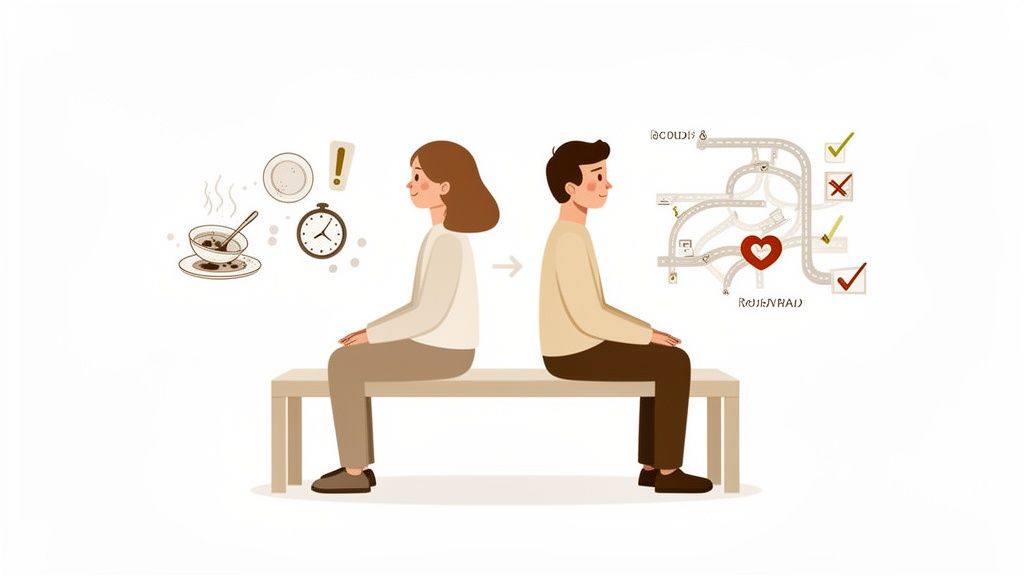
Let’s be honest. Most fights aren’t about what they seem to be about. The blow-up over the unwashed dishes? The tension over being five minutes late? That’s just the tip of the iceberg. The symptom, not the problem.
The real fight-starters are hidden triggers lurking beneath the surface. These are deeper emotional currents. Feeling unappreciated after a long day. Feeling dismissed when you’re trying to make a point. Feeling insecure about something else entirely.

If you only address the surface issue (the dishes), you guarantee the same fight will happen again. Next week it might be about the trash, but the real reason—that feeling of being taken for granted—will be the same. To break the cycle, you have to look past the symptom.
Look for the Story Under the Story
Think about your last argument. Especially one that started over something small. What was the surface issue? Now, go a level deeper. What was really going on for you emotionally right before it started?
Here’s a real-world example:
- The Surface Story: “You left your coffee mug on the counter again.”
- The Under-Story: “I spent the morning cleaning the kitchen so we could have a calm space. Seeing the mug makes me feel like my effort was invisible.”
See the difference? The argument isn’t about a coffee mug. It’s about feeling unacknowledged. This distinction is everything. Once you recognize these patterns, you can get ahead of them. If you notice these conversations constantly go sideways, it’s worth digging into the common relationship communication problems that trip most couples up.
Start a Private Trigger Log
I know, it sounds like homework. But this is one of the most powerful tools for clarity. A trigger log is just a simple, private place to track those moments of friction. This isn’t about building a case against your partner. It’s about building self-awareness.
For one week, observe your own emotions. When you feel that flash of irritation, take two minutes later to privately jot down three things. A notes app works perfectly.
- The Situation: What was happening? (e.g., “Rushing to get ready for dinner.”)
- The Surface Issue: What was the topic? (e.g., “My partner couldn’t find their keys.”)
- The Real Feeling: What was the core emotion for you? Be honest. (e.g., “I felt anxious about being late and disrespected, like my time doesn’t matter.”)
After a week, you’ll have data. You can look back and see the real patterns. Maybe arguments on Sunday nights are really about anxiety over the work week. Or fights about money are actually rooted in a fear of instability.
A trigger log shifts the focus from your partner’s actions to your own reactions. It gives you the power to understand why you feel a certain way. That’s the first step toward changing the dynamic.
This isn’t about blame. It’s about understanding your own emotional operating system. Once you see the pattern—for instance, realizing that feeling ignored is a huge trigger for you—you can address that root cause.
You can finally say, “Hey, I’ve noticed when things get hectic before we go out, I feel stressed and ignored. Could we try to have everything ready 10 minutes before we need to leave?”
That’s a solvable problem. An argument about “always being late” is not. You stop fighting the symptom and finally start fixing the cause.
De-escalation Tactics You Can Use Mid-Argument
We’ve all been there. The conversation takes a sharp turn. Your heart starts pounding. Suddenly you can’t think straight. That’s your brain’s fight-or-flight response crashing the party. It’s a terrible mindset for solving anything with someone you love.
In the heat of the moment, advice like “just be calm” is useless. You need concrete tools. A circuit breaker for the emotional overload. These are the techniques you pull out to stop the downward spiral.
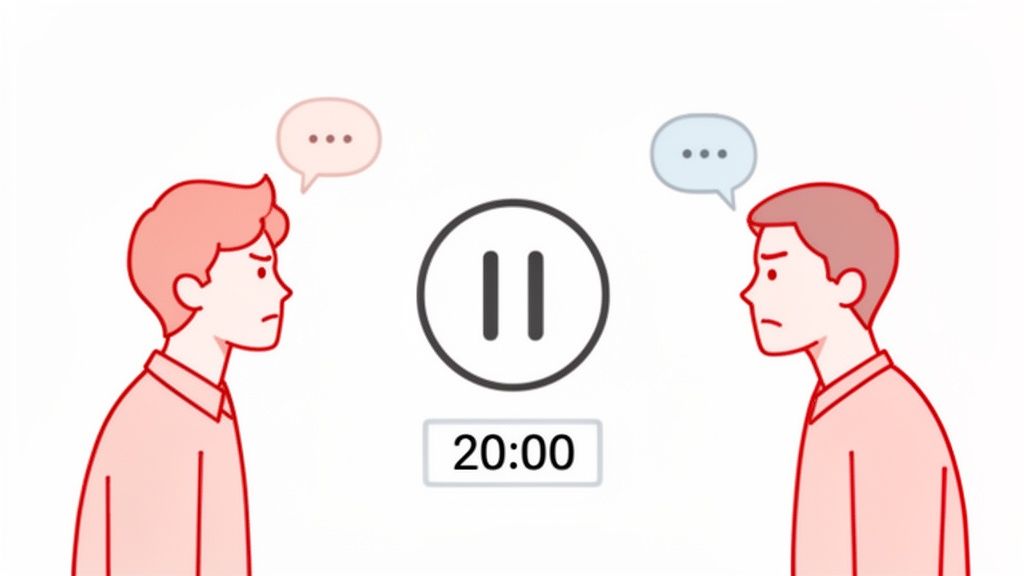
The goal isn’t to run away from the problem. It’s to hit the pause button long enough for your logical brain to get back online. Think of it as a tactical retreat, not a surrender.
Master the 20-Minute Pause
When things get heated, your body is flooded with stress hormones. Experts call this state flooding. Once you’re flooded, your ability to listen or empathize plummets. Continuing the discussion is like trying to have a delicate conversation next to a jackhammer. It won’t work.
This is where the 20-Minute Pause Rule becomes your most effective tool. Research shows it takes at least 20 minutes for the physiological symptoms of stress to subside. A five-minute breather won’t cut it. Your body is still primed for a fight.
Here’s how to use it:
- Spot the Signs: Know your physical cues. Jaw tight? Heart racing? The urge to walk out? That’s your red flag.
- Call the Timeout (Together): You have to agree on the pause. Storming out without a word only makes things worse.
- Set a Return Time: Agree to come back in 20-30 minutes. This is crucial. It reassures your partner you aren’t ditching the issue.
What you do during that 20 minutes matters. Don’t replay the argument in your head. Do something completely unrelated and calming. Take a walk. Listen to music. Tidy a bookshelf. Let your nervous system reset.
Use Simple, Effective Scripts
When you’re overwhelmed, you don’t have the mental bandwidth for eloquent speeches. You need simple, pre-agreed phrases you can say almost automatically. These are your conversational emergency brakes.
- To start a pause:
- “I want to figure this out, but I’m too overwhelmed to think clearly. Can we please take 20 minutes?”
- “I can feel myself getting heated. I don’t want to say something I’ll regret. I need a short break.”
- “This is important, and I’m not in the right headspace. Let’s pause.”
Notice these statements are about you. You’re not saying, “You’re making me angry.” You’re saying, “I am feeling overwhelmed.” It’s a small shift in language with a big impact.
Shift from Attacking to Clarifying
Another powerful move is to switch from defending yourself to getting curious. When we feel attacked, our first instinct is to fire back. Resist that urge.
Instead, try to understand what your partner is actually saying. This forces you to listen and shows them you’re making an effort.
- To clarify what you’re hearing:
- “Let me make sure I’m understanding. It sounds like you’re feeling hurt because you thought I was ignoring you. Is that right?”
- “So I’m hearing you’re worried about our budget for the trip. Can you tell me more about what’s concerning you?”
- “I can see this is upsetting you. Can you help me understand which part is most frustrating?”
This simple technique slows the conversation down and makes your partner feel heard. Feeling understood is a powerful de-escalator. For more scripts and frameworks, many couples find value in exploring guides on effective conflict resolution.
Learning to stop arguing isn’t about ignoring tough conversations. It’s about having them productively. By calling a strategic pause and choosing to understand rather than attack, you can stop a fight before it truly begins.
Building Your Shared Playbook for Disagreements
The most resilient couples don’t magically avoid conflict. They have a plan for it. Think of it like a team sport. You’d never show up to a big game without a playbook. Your relationship deserves the same forethought.
This isn’t a stuffy, corporate rulebook. It’s a relaxed conversation when you’re both calm to figure out your basic rules of engagement. Doing this ahead of time keeps you from falling into destructive patterns when tensions are high. You’re designing a better way to handle friction, together.
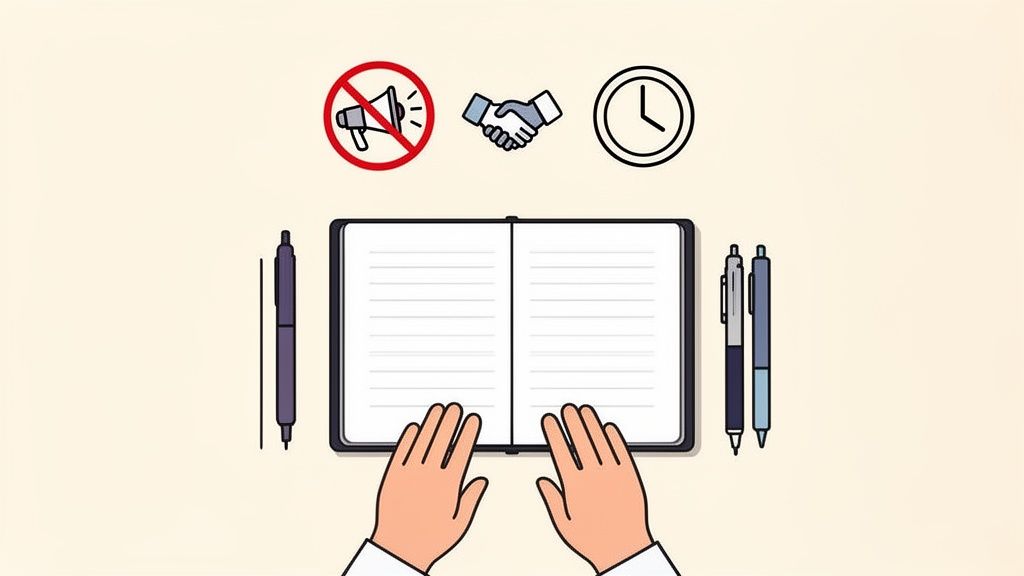
This shared agreement becomes a system you both trust. For many, that’s a total game-changer for emotional safety.
Setting Your Ground Rules
The goal is simple: decide what’s in-bounds and out-of-bounds. Have this chat over coffee on a weekend, not in the thick of a fight.
Get started by asking each other a few direct questions:
- What feels completely off-limits? This is where you set firm boundaries. The non-negotiables.
- What has been unhelpful in past arguments? Get specific. Think about behaviors that make things worse.
- What actually helps you feel heard? Focus on what to do, not just what to avoid.
From that conversation, create a short list of ground rules. It doesn’t need to be long. Three or four clear agreements can make a world of difference.
Here are a few common ones that work:
- No name-calling or character attacks. Attack the problem, not the person.
- Stick to the current issue. Don’t bring up grievances from five years ago.
- No interrupting. Give each other space to finish a thought.
- The 20-minute pause is always an option. Either of you can call a timeout, no questions asked.
These rules create a framework that helps you both feel safe. A safer conversation is almost always a more productive one.
Define What a “Win” Looks Like
How do you know when an argument is over? If you have different definitions, you’ll never feel resolved. For one person, a “win” might be a sincere apology. For the other, it might be a concrete plan to fix the problem.
You need a shared definition of a successful repair. Does it mean you’ve reached a compromise? Or is it enough that you both feel understood? Talking about this ahead of time is crucial.
This isn’t just a nice idea. It’s a key insight from studying couples who last. A study of over 1,100 people married for 40+ years found that six core strategies made up 72% of their conflict resolution tactics. These were simple, repeatable behaviors like listening and compromising. You can learn a lot from what these long-term couples can teach us.
Create Your Repair Ritual
A repair ritual is a small, specific action you agree to take after a disagreement. It’s a signal that you’re back on the same team. It closes the loop and reinforces your connection.
This doesn’t have to be a grand gesture. Simple and consistent is better.
Your ritual could be as simple as:
- Making each other a cup of tea.
- Going for a short walk together.
- A specific phrase like, “Okay, we’re good now, right?” followed by a hug.
The action itself matters less than the shared meaning behind it. It’s your unique way of saying, “The conflict is over. We’re a team again.” This reinforces that an argument is a temporary state, not a permanent crack in your foundation. By building a shared playbook, you create a structure that supports your connection, turning potential fights into opportunities for deeper understanding. This process is fundamental to learning how to build emotional intimacy even when things get tough.
The Two-Minute Habit That Prevents Future Fights
So far, we’ve talked about what to do when you’re already in a fight. But what if you could stop most of them before they begin? This isn’t about adding another hour-long chore to your day.
This is about a tiny, consistent habit that works like preventative medicine. It’s a simple, private two-minute check-in you do with yourself. It can completely change the dynamic in your home. Think of it as your personal emotional filter.
Taking a moment to reflect on your day gives you incredible clarity. You process your own emotional static instead of dumping it on your partner.
Process Your Own Stress First
We all do it. We walk in the door carrying the stress of the day. A tense meeting. A terrible commute. A project that blew up. If you don’t give that stress an outlet, it just leaks out everywhere.
This is why an innocent question like, “What’s for dinner?” can ignite a surprisingly intense argument. The fight is never about the pasta. It’s about the unresolved tension from the last eight hours.
The two-minute check-in gives that stress a place to go before it hits your partner. It’s a quick, private debrief. The goal isn’t to rehash every detail later. It’s to simply understand where your own head is at before you interact.
You’re not just managing your mood; you’re protecting your peace. This tiny habit stops individual stressors from snowballing into shared conflicts. It’s about taking ownership of your emotional energy.
This practice helps you become less reactive. Instead of snapping back, you gain the self-awareness to say, “Hey, it was a rough day. I just need a few minutes to decompress.”
How to Do the Two-Minute Check-In
The barrier to entry here is almost zero. No special journal or silent meditation room required. You can do this in your car before walking into the house. At your desk before signing off. Or even while washing your hands.
Just ask yourself three simple questions:
- What was the most stressful part of my day? Simply naming it helps. Acknowledging the source of your tension loosens its grip.
- What felt good or went well today? This isn’t forced positivity. It’s about creating balance in your perspective.
- What do I need right now to feel centered? Five minutes of quiet? A glass of water? A quick walk? Identify what you need so you can give it to yourself.
This isn’t just about feeling better in the moment. Learning to manage conflict constructively has real physical benefits. A University of Georgia study found a direct link between how couples handle disagreements and key biomarkers for physical health. In other words, a healthier approach to conflict can literally lower your body’s stress long-term. You can learn more about the research linking conflict resolution to long-term health.
This small habit is a powerful investment. You trade 120 seconds a day for calmer evenings, fewer pointless fights, and a stronger connection. It’s the ultimate preventative care for your relationship.
Common Questions About Reducing Relationship Conflict
Reading about these strategies is one thing. Using them when you’re stressed is another. Let’s tackle some common questions and roadblocks.
Think of this as your practical troubleshooting guide. Getting straight answers will help you feel more confident putting these tools to work.
What If My Partner Won’t Try These Strategies with Me?
This is a big one. And it’s a fair question. The good news? You can still create a massive shift on your own. You can’t control your partner. You have 100% control over your own actions.
For now, focus on your side of the street. Get good at spotting your own triggers. Use the 20-minute pause when you feel overwhelmed.
When you consistently change your own behavior—like calmly saying you need a break instead of yelling back—you change the dance. You stop adding fuel to the fire. More often than not, your partner will notice. Over time, their own responses might soften. You’re not forcing them to change; you’re modeling a better way.
We Argue About the Same Things Over and Over. How Do We Break the Cycle?
If you’re stuck in a loop, it’s a huge sign the argument isn’t about what you think it’s about. The bickering over chores or money? That’s the symptom. The real problem is a deeper, unmet emotional need.
These “repeat offender” fights are usually about feeling:
- Unappreciated: “Do you even see how much I do?”
- Unheard: “My opinion doesn’t seem to matter.”
- Unsupported: “I feel like I’m carrying this on my own.”
- Insecure: “I’m scared you don’t prioritize us anymore.”
To break the cycle, get curious about the story underneath the story. The next time that familiar argument starts, hit pause. Instead of getting bogged down in the “facts” of who did what, ask a different kind of question.
Try saying, “Look, we get stuck here a lot. I know we’re talking about the credit card bill, but on a deeper level, what does this fight really feel like it’s about for you?”
Getting to that root emotional need is the only way to solve the problem for good. Just dealing with the surface issue is like pulling a weed without getting the root. It’s guaranteed to grow right back.
How Long Does It Take to See a Real Change?
This isn’t an overnight fix. But you can change the vibe of your relationship faster than you think. You don’t need to perfectly execute every strategy to see progress.
Consistently using just one de-escalation tactic, like the 20-minute pause, can lower the temperature of your arguments within a few weeks. Proactive habits, like the daily two-minute check-in, can start preventing fights within a month.
The goal isn’t perfection; it’s progress. A huge win is successfully pausing one fight this week that would have blown up last week. Track these small victories. They’re the fuel that will keep you going.
When Should We Consider Therapy Instead of Just Trying These Tips?
The tools in this guide are effective for the normal friction all couples face. That said, some situations need a professional’s support.
It’s time to consider therapy if:
- Arguments frequently involve contempt. We’re talking name-calling, cruel sarcasm, mocking, or deep disrespect.
- You feel consistently hopeless or unsafe. If fights leave you feeling emotionally or physically threatened, it’s crucial to get help.
- You’re just plain stuck. If you’ve tried these strategies for a few months and you’re still in the same painful cycles, a therapist can make all the difference.
A good therapist can help you unpack deeper issues that might be fueling the conflict. Please don’t see therapy as a sign of failure. Think of it as calling in a specialist, a powerful resource for navigating complex dynamics. These tools can be an excellent complement to that work.
Feeling overwhelmed by constant arguments doesn’t mean your relationship is broken. It just means your current communication system isn’t working for you anymore. The first step toward a real solution is understanding the patterns behind the conflict.
Twine is a private relationship journal designed to help you and your partner see those patterns clearly. In just two minutes a day, you each jot down your own reflections. Over time, Twine reveals actionable insights about what’s working and where there’s room to grow, helping you turn conflict into connection.
Ready to stop guessing and start understanding? Learn more about how Twine works.
Related Articles

10 Practical Relationship Check In Questions for Busy Couples
You’re busy. You optimize your career, your finances, your health. You use data to make smart decisions. So why does…

How to Make a Guy Feel Loved (Without Overthinking It)
You say "I love you," but does he really feel it? Making a guy feel deeply loved isn't about grand…

How to Create a Couple Card Game That Actually Connects You
A couple card game can do more than just pass the time. It can be a simple ritual. A way…